
It said banks' asset quality will deteriorate across the corporate, small and medium enterprises and retail segments, leading to pressure on profitability and capital.
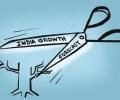
Moody's Investors Service on Thursday slashed India's economic growth projection for 2022 to 7.7 per cent, saying that rising interest rates, uneven monsoon, and slowing global growth will dampen economic momentum on a sequential basis.

Moody's Investors Service on Monday said it has assigned a first-time B3 corporate family rating (CFR) to ANI Technologies, which operates ride hailing service Ola. Moody's CFRs are opinions of a corporate family's ability to honour all of its financial obligations. It has also assigned a B3 rating to the company's proposed senior secured term loan.

Bharti recorded $5 billion liability for past-due AGR fees, but is still completing its self-assessment to determine the final amount.

Ratings agency Moody's on Tuesday affirmed India's sovereign rating and upgraded the country's outlook to 'stable' from 'negative', citing receding downside risks to the economy and financial system.

Moody's has forecast that China would be the only G-20 country to post growth this year.

Moody's Investors Service on Friday warned that the rout in Adani Group shares could hurt the conglomerate's ability to raise capital, while its peer Fitch saw no immediate impact on its ratings. Adani Group's listed companies have lost over USD 100 billion in value in just over a week after short-seller Hindenburg Research's scathing report flagged concerns about the ports-to-energy conglomerate's debt levels and alleged stock manipulation, accounting fraud and the use of tax havens.

Moody's Investors Service on Thursday said the credit downturn arising out of COVID-19 will be short-lived but most economies will not return to pre-pandemic activity levels until 2022. In the year since the World Health Organisation (WHO) declared COVID-19 a pandemic on March 11, 2020, the virus has disrupted the global economy and triggered a credit downturn accompanied by a spike in bond defaults. "The credit challenges arising from COVID-19 have been substantial, but the credit downturn likely will be relatively short-lived. "Risks remain more significant for the sectors most vulnerable to restrictions on their normal activities," Moody's said in a global report in coronavirus. Stating that most economies will not return to pre-pandemic activity levels until 2022, Moody's said it expects a slow and bumpy global recovery and uncertainty around the macroeconomic outlook remains much higher than usual.

Moody's Investors Service on Thursday downgraded subordinated debt ratings of 11 Indian banks, including SBI, ICICI Bank and HDFC Bank.

Moody's Investors Service on Thursday said loans to retail customers, especially those to low-income borrowers, will remain most affected due to the shock caused by the coronavirus pandemic. Despite the pandemic challenges, asset quality at Indian banks has performed better than expected at the start of the outbreak, Moody's said. "Corporate loans, in particular, have performed well because banks prior to the pandemic had largely provisioned for legacy problem loans and tightened underwriting standards," Moody's vice president and senior credit officer Srikanth Vadlamani said. Addressing an online conference organised by Moody's and its affiliate Icra, Vadlamani said an increase in non-performing loans in both public and private sector banks is subdued.

It had upped India's rating to Baa2 from Baa3 and changed its rating outlook to 'stable' from 'positive', saying the reforms would help stabilise rising levels of debt.

Moody's and Fitch on Thursday downgraded Russia's sovereign rating to 'junk' grade following severe sanctions by western countries. While Moody's Investors Service downgraded Russia's long-term issuer and senior unsecured (local-and foreign-currency) debt ratings to 'B3' from 'Baa3', Fitch pulled down the rating on the country to 'B' from 'BBB', putting it on 'Rating Watch Negative'. The downgraded rating is in speculative or junk category reflecting default risk. It signifies that even through financial commitments are currently being met, the sovereign is vulnerable to high credit risk.

The budget underscores government's previous emphasis on capex to sustain near-term recovery from the pandemic, while simultaneously paving the way for longer-term restructuring of the economy, it stated. But the various spending initiatives are not offset by any significant announcements related to further increase revenue generation; rather, the announced revenue-related measures are aimed at other objectives such as fostering startup innovation, ensuring more equitable treatment for cooperatives and state employees, and promoting tax compliance through simplification, Christian de Guzman, a senior vice-president, sovereign risk group, Moody's Investors Service, said.

Moody's, which cut its FY14 growth estimate to 4.5 per cent recently, said economic growth will be lowest in a decade.

Moody's said together, proceeds from these transactions will result in a $ 16 billion reduction in RIL's net debt.

Finance Minister Arun Jaitley presented his maiden budget last week in which he vowed to contain fiscal deficit at 4.1 per cent this year and lower it to 3 per cent by 2016-17.

Reliance Industries Ltd is expected to invest Rs 30,000 crore (Rs 300 billion), of the total Rs 70,000 crore (Rs 700 billion) announced, in its telecom arm Reliance Jio Infocomm over the next two years, credit rating firm Moody's said on Monday. The investment in the telecom business is a credit negative for RIL because RJio will not generate any EBITDA (an indicator of cash flows) for at least next 12 months, it said. Moody's added however that RJio will be a formidable competitor in the sector making it a credit negative for top telecom operators already in the field. "Based on RIL's March 2014 annual report, we estimate that it has already invested about Rs 400 billion (Rs 40,000 crore) in Reliance Jio, and we expect RIL to invest the next Rs 300 billion in Reliance Jio over the next two years," Moody's Investors Service said in a statement. RIL recently announced that it will launch commercial 4G telecom service of RJio in 2015 entailing investment of Rs 70,000 crore. RIL has said that RJio will initially cover about 5,000 towns and cities accounting for over 90 per cent of urban India, as well as over 215,000 villages in India and the target is to expand this to over 600,000 villages. Moody's said RJio will be a "formidable competitor in India's telecom sector" as it will enter the business with financial muscle. RJio's entry into highly competitive telecom sector is also credit negative for incumbent mobile operators and market leaders Bharti Airtel and Vodafone India because "it will undoubtedly result in intensified competition that will lead to declines in average revenue per user and margins". But, it also said that strong spectrum holding of incumbents; existing large subscriber-bases and well- established brand equity; offering 2G and 3G services (apart from 4G services being launched) as well as marketing and distribution architecture mitigate much of the near-term competitive threat from Reliance Jio for them. "Furthermore, given issues of language and literacy, large parts of rural India remain a substantially voice-based market where near-term demand for 4G services may be muted," Moody's said.
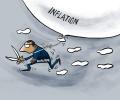
The government is "extremely disappointed" with the latest report of the Moody's rating agency on India's economic outlook. The report, a senior government official said, was highly contradictory and called the rating agency's credibility into question. Referring to the Moody's statement that "India's fiscal strength remains a key weakness in the sovereign credit profile...", the official remarked: "How can my strength be my weakness? Moreover, they are unwilling to have a like-to-like comparison with India."

Budget 2026 sticks to fiscal discipline, shuns populist measures despite five key state elections coming up, but ends up rattling stock markets with a higher transaction tax on derivatives trading.

The report did not specify the impact the rate hike will have on India.

The economic impact of the Omicron variant of COVID-19 on emerging economies will depend on a mix of government restrictions, public comfort with social interactions, and capacity of governments and central banks to provide additional policy support to the private sector, Moody's Investors Service said on Wednesday. The emergence of the new variant poses new risks to the global economic growth and inflation outlook, as concerns mount about the variant's health risks and several countries have imposed new travel restrictions in recent days. These restrictions will likely increase over the coming weeks until scientists learn more about the variant, it said.

Earlier this month, Parliament approved the Insolvency and Bankruptcy Code, 2016.

Pointing out that these recent measures are incremental rather than radical, Moody's said, these steps will sustain higher gross domestic product growth and address some of the constraints on the country's sovereign credit profile.

Moody's on Thursday said the new 'inflation targeting' mechanism is a "credit positive" move.
Moody's Investors Service on Thursday slashed India's economic growth projection to 8.8 per cent for 2022 from 9.1 per cent earlier, citing high inflation. In its update to Global Macro Outlook 2022-23, Moody's said high-frequency data suggests that the growth momentum from December quarter 2021 carried through into the first four months this year. However, the rise in crude oil, food and fertilizer prices will weigh on household finances and spending in the months ahead.

Billionaire Mukesh Ambani's Reliance Industries Ltd (RIL) has seen pre-tax profit recover to pre-pandemic levels on the back of continued growth in consumer businesses, Moody's Investors Service said on Monday. The oil-to-retail-to-telecom behemoth on Friday reported a 0.7 per cent Ebitda (earnings before interest, tax and depreciation and amortisation) growth for the quarter ended December 31, 2020, compared with the corresponding quarter in the previous year. "A strong performance in digital services and retail segments underpinned the improvement in consolidated earnings, a credit positive," Moody's said commenting on the earnings. Continued growth in earnings combined with the company's strong balance sheet with zero net debt on a reported basis will keep Reliance's credit metrics strong for its Baa2 rating over the next 12-18 months, it said.

Moody's said it reflects India's weaker performance on fiscal.

Moody's Investors Service on Thursday said India is likely continue to face challenges in raising longer-term growth potential and creating enough jobs for its young population in the absence of higher trade openness. In its report on South Asia sovereigns, Moody's said compared with other South Asian economies, India appears to be in a better position to deepen its integration in global value chains, attract FDI and increase exports. The country has better macroeconomic fundamentals, more stable politics and a more developed export sector.

Moody's Investors Service on Wednesday slashed India's growth projection to 9.6 per cent for the 2021 calendar year, from its earlier estimate of 13.9 per cent, and said faster vaccination progress will be paramount in restricting economic losses to June quarter.

Moody's Investors Service, while silent on the sovereign rating on the higher-than-expected fiscal deficit numbers, expressed doubts over attaining the higher revenue targets and divestment realisation as assumed in the Budget. The Union Budget 2021-22 has pegged a fiscal deficit of 9.5 per cent for the current financial year as against the consensus 7 per cent, and 6.8 per cent for 2021-22 with a market borrowing of around Rs 12 lakh crore. It also assumes Rs 1.75 lakh crore to be scooped up from divestment.

The agency noted that the reviews of these banks' sub-debt ratings were not indication of any change in the affected banks' fundamental credit quality.

India, the world's fourth largest economy, is set to maintain the 'goldilocks' phase with tailwinds of good growth, low inflation and robust banking performance as well as reform initiatives poised to sustain the economic pace witnessed during 2025.

Petrol and diesel prices are unlikely to be increased despite firming raw material costs because of upcoming general elections next year, Moody's Investors Service said. Three state-owned fuel retailers -- Indian Oil Corporation (IOC), Bharat Petroleum Corporation Ltd (BPCL) and Hindustan Petroleum Corporation Ltd (HPCL) -- which control roughly 90 per cent of the market, have kept petrol and diesel prices on freeze for a record 18 months in a row. This is despite the raw material (crude oil) cost surging last year, leading to heavy losses in first half of 2022-23 fiscal year before easing oil prices propelled them to profitability.

Rajan has ignored pressure to loosen policy.
Moody's assigns 'Baa3' rating on India, with a stable outlook.

Moody's said fiscal measures undertaken by the government -- such as corporate tax rate cuts, bank recapitalisation, infrastructure spending plans, support for the auto sector and others -- do not directly address widespread weakness in consumption demand, which has been the chief driver of the economy. In addition, interest rate cuts by the Reserve Bank of India are not being adequately transmitted to lending rates because of the credit squeeze caused by disruption in the non-bank financial sector, it said.

Apart from supply chain disruptions, Moody's also expects consumption and investment to be affected and prices of oil and other commodities to remain around current lows until the end of June.

Stating that the economic costs of shutdown of the global economy are accumulating rapidly, Moody's projected that all G-20 advanced economies would contract by 5.8 per cent in 2020.

Moody's assigns a 'Baa3' rating on India, with a stable outlook.
.jpg)
The depreciation of the rupee, it said, reflects the wider CAD as well as lower net capital inflows.
